Author: Podunk Polymath

A leftist that's sick of your liberal sh*t.

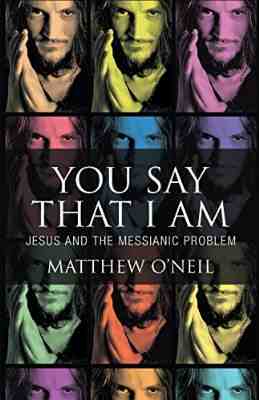
This Is Not The Messiah You’re Looking For : Matthew O’Neil’s “You Say That I Am : Jesus and the Messianic Problem”

I was fortunate enough to receive a copy of “You Say That I Am : Jesus and the Messianic Problem” from the author, Matthew O’Neil. For those not familiar with Mr. O’Neil, he is an educator with a with an MA in Theology as well as graduate certification in mediation and education. In addition to this book, he is releasing another book soon named Come Lord Jesus : What The Bible Really Says (and Doesn’t Say) About Sex, which should be an interesting and intriguing read! He was also covered. an episode of our podcast in one of our atheist/skeptical author segments. I also must mention he’s a pretty damn good musician, as well as an all-around cool guy.

The subject of You Say That I Am is the question of whether Jesus of Nazareth was truly the Messiah as foretold by the Old Testament of the Holy Bible. Spoiler alert : Mr. O’Neil’s answer is a resounding no! I must disagree on one point, which is really irrelevant to the subject of the book itself, but which I feels bears mentioning. Mr. O’Neill believes Jesus of Nazareth was an actual historical figure, while I myself am a mythicist, which essentially means I believe that Jesus was invented from whole cloth, or perhaps he is an amalgamation of different prophets who were quite common at the time. Mr. O’Neill in fact addresses the issue of Jesus’ existence in his first chapter, in which he explains why he believes that a historical Jesus DID exist, and gives cogent and well-reasoned arguments why he believe this to be the case.  As I said, however, this doesn’t really pertain to the main thrust of the book, for Mr. O’Neill and I do agree that Jesus was most definitely not the Messiah as prophesied by Jewish tradition.

Mr O’Neill’s arguments in favor of his contention that Jesus was not the Messiah are backed up by plentiful evidence from the scriptures themselves. Indeed, this is where his knowledge and background in Theology really come through to great effect. He uses specific verses to clarify his points, and he also uses background on the ancient Hebrew culture to explain the context of these verses.

Lest you think that this book is overly dense and difficult to read, Mr. O’Neill’s writing is clear and concise, even when tackling the most esoteric topics. He does an excellent job in explaining the topics he covers in such as a way as to enable the reader to understand his conclusions, even though the reader may not be familiar with the subject matter. Mr. O’Neill make sure that the reader is there with him every step of the way, and that is important when trying to reach a wider audience.

In his prologue Mr. O’Neil states that the idea for this book came from a question a student of his asked him : “Why don’t Jews accept Jesus as the Messiah?” He spends this book trying to answer this question, from Jesus’ very existence; to the definition of the word “Messiah”; to other titles used in the Hebrew bible which are equivalent to Messiah; on to the attributes of the Messiah as stated in Hebrew lore; and then including the problem of miracles (did Jesus perform any?), the crucifixion, the resurrection, and the acts of the apostles. When finally he comes through all this research and exposition, he finally has an answer to give to his student :

It should not be a question of why the Jews do not accept Jesus as the Messiah, but instead, given the evidence that has been presented, one of why anyone would ever consider Jesus the Messiah.

Why would anyone indeed?

A Handbook for Heathens : J.D. Brucker’s “Improbable : Issues With The God Hypothesis”

I became acquainted with the writing of J.D. Brucker about a month ago when I came across a post of his on Dan Arel’s Patheos blog, Danthropology. It was a bittersweet vignette about the death of a mentor and friend that he had lost contact with. When he tried to reconnect some time later, he found it out that in the intervening time, his friend had died in an accident. Rather than this story being one of despair and hopelessness, however, he told of his realization that death was just a word, and that what was truly important was to remember those who have died, and to live your own life fully.

This sentiment touched me and I started to converse with him via Twitter and e-mail. I spoke about him as the inaugural subject of a segment that debuted on our podcast, Unbuckling The Bible Belt, which highlights secular/atheist writers and journalists. He was kind enough to provide me with a copy of his first book, Improbable : Issues With The God Hypothesis, which I immediately read and thoroughly enjoyed.

One does not need to read far to find the purpose of his book. Indeed, the first sentence in the preface lays it out quite nicely.

This work has found its way into being based solely on the idea that the Abrahamic deity – known by the Muslim as Allah, by the Jew as Yahweh, and by the Christian as God – is the creator of all living and inanimate matter inside the known universe.

And then a simple question : “Does the god of Abraham exist?”

Thus begins a relatively short (Improbable only comes in at some 164 pages) but fact-filled, incisive, and at times scathing deconstruction of the arguments given by theists for the existence of God.

Mr. Brucker puts forth his plan of attack against the cultural behemoth that is the belief in a Supreme Being. There are seven chapters, each addressing a specific claim in his overall thesis. Unlike many theists such as Ken Ham who simply says “I have a book”, and considers that sufficient proof for any and all of claims they might make, Brucker includes citations for sources that bolster his argument. Such is the approach of a rationalist dedicated to the scientific method of inquiry.

The first chapter covers how the evolutionary history of our species, Homo Sapiens. The chapter opens with the Biblical version of the creation myth, with the apex of that story being the penultimate fairy tale of our Judeo-Christian culture: The story of Adam and Eve and their fall from grace. Brucker than tells the true history of human evolution, as it is known by scientists, and which is backed up by plentiful evidence gathered over centuries. He tells the complete story, from our origins in pre-human ancestors to the way our species came to be in Africa and dispersed across the globe. This is a story that is far more interesting and intricate than some tall tale invented by Bronze Age sheep herders.

In the second chapter Brucker takes Intelligent Design (a euphemism for Creationism) head-on, poking holes in the already flimsy theories put forth by Creationists as to how their God  was perfect, thus his creations must be perfect. Countless examples of imperfection in humans and other species are given that easily disprove this theory. Brucker instead offers the scientific theory of transitional species and evolution by natural selection. The theories are far more satisfactory, deriving as they have from observable phenomena as well as concrete examples in the fossil record. While the idea that our species is perfect in every way might be soothing to some, I find hard truth to be far more satisfying.

Chapter three covers biological explanations as to why humans seem so susceptible to belief in the supernatural, including religion. He looks at the example of near death experiences as to how our brains can trick us into believing we are experiencing a supernatural event, when really this is simply a defense mechanism to soothe us prior to impeding death. He also addresses the questionable morality of the various psychological rationalizations humans use to justify things they do in the name of faith, even actions that would be considered unthinkable in normal circumstances. We ultimately must conclude the human brain is very capable of altering perceptions and causing self-delusion. Thus God is of our own creation, not vice versa.

The fourth chapter covers the age-old question believers always ask non-believers : How can you be moral without religion? The answer is, of course, is that morality does not derive from religion, and it certainly doesn’t emerge from the Abrahamic tradition. If anything, people are moral DESPITE those blood-soaked works. Brucker offers up several verses from the Bible and Qur’an that shows the so-called “moral” prescriptions offered up were anything but moral, but instead can only be understood in the context of an existence where life was, as Hobbes put it, “nasty, brutish, and short” More often than not, these books tells its adherents to kill in the name of their God and permits terrible punishments for even the smallest transgressions. In contrast to this religious origin of morality, the scientific theory of our species acquiring morality through evolution is put forth by Brucker as the more sensible approach as well as the one with more evidence to support its claims. Again, Brucker puts forth the religious explanation and then presents the scientific theory, and the scientific theory wins out, at least to a rationally minded person.

Chapter five speaks to the creation of the Universe from both the Biblical and scientific perspective. Of course, the religious claim of an anthropocentric universe made with humans in mind is the one put forth by theists. Even those more moderate types who concede that the universe is probably more than 6000 years old try to use the Kalam Cosmological Argument to prove the universe must have been created, thus there must have been a Creator. In contrast, Mr. Brucker gives the scientific explanation that has been developed so far involving the Big Bang and the overwhelming evidence for this theory of how the Universe itself was created, and why a God isn’t necessary in order for this to happen.

In chapter six Brucker explores the area of the Middle East where the Abrahamic traditions developed, and how these religions were not unique in their beliefs. Indeed, Mr. Brucker gives several examples of traits and trappings of other religions that were almost certainly expropriated with little or no alteration from earlier traditions. We also see how the events in the Bible and the Qur’an have little to do with actual history and more to do with attempts to twist timelines to make their actions to appear more meaningful in a historical context than they actually were. Examples are given from both the Qur’an and the Bible of how things that are presented as historical fact cannot, in fact, be proved to have actually occurred. The argument is put forth by theists that these texts are not to be taken literally. This is, of course, until it is convenient for them to do so.

In the final chapter, Brucker drops the final bombshell : Moses and Jesus probably didn’t exist. Here we see perhaps Brucker’s greatest effort at disproving biblical accounts, as he points out inconsistencies and flaws in the historical record regarding these two Biblical heroes. Nowhere in Egyptian hieroglyphs is any mention found of any sort of mass exodus of Jews, nor is there any mention of mass deaths of Egyptians of plagues. Lest theists think that the general history of Egypt of that period is not very well-known, the reigns of the Pharaohs are very well documented, and calamities of the magnitude demonstrated in the Bible would surely have been mentioned. As to Jesus, he supposedly lived during the era of the Roman Empire, which is even more well-documented. The only mention of note, that of Josephus in “Antiquities” has been proven by scholars to be a forgery ; a reference to Christ later inserted by a Church anxious to mask the truth that its entire reason for existence never actually existed. Of course, these are a few of the many arguments put forth, but the preponderance of evidence cannot be ignored.

In his Afterword, J.D. Brucker tells why he decided to write this book. He speaks of a journey from doubt to his current stopover as an atheist and anti-theist. Towards the end, he speaks to the type of person he hopes to reach the most.

I wrote this book for the fence-rider in order to present the truth as we understand today. Along with most atheists, I can recall a time in which such information would have proved beneficial because having doubt in something – particularly religious teaching – is quite normal, and questioning the veracity of religious faith is a common occurrence.

Of course, this book is for anyone who is anyone interested in what arguments are out there to disprove the claims that theists make as to why their God exists, be they hardcore atheists or newcomers to disbelief. This is the greatest contribution J.D. Brucker has made with this work. He’s given us a handbook to debate those who would use fairy tales and fear to convince us to follow their God, and I for one am glad that such a book has been written.
Kirk Cameron and the Insidious Nature of Christian Persecution Complex

By now most, if not all, of you have heard of Kirk Cameron’s new Christmas movie “Saving Christmas”, and the horrible reviews it has received from critics on Rotten Tomatoes, the movie rating aggregation site. It sits at a dismal 8% as of the time of this writing (11/25, at approximately 12:15 PM CST). You have also no doubt heard of Mr. Cameron’s furious reaction, and his call to all of his Facebook followers to go on the site and inflate the fan rating number as high as possible, because that’s after all what Jesus would want, and has absolutely nothing to do with Kirk’s desire to make more money off a piece of shit film. Just go to the original Facebook post to see with what enthusiasm his mindless minions pledge to go and defeat Satan by artificially increasing the percentage, and thus the perceived awesomeness of the film as rated by fans (Rotten Tomatoes has a rating determined by critics, and also, separately, one where fans can give their own rating. This is the one he was trying to raise).
For a time, this seemed to work. In the wee hours of Friday, November 21st, the fan favorability percentage was up to 94%. Oh, but those damned atheists caught wind of his scheme, and decided to counterattack the charge of the Christians by leaving their own negative reviews. So the fan rating went from a peak of 94% to its current rotten (but not quite as bad) level of 36%, with a total of 15,103 ratings, which is an average “tomato” rating of 2.1 out of 5. So it looks like his plan has, at least for the moment, backfired on him.
Now, there’s a couple of things about the ratings you could argue about. For one, the average critics’ review is only based on 13 ratings, which isn’t a very large sampling size, so the film’s backers could claim the judgment of “rotten” is thus invalid. Also, it says on the page itself that there is “no consensus yet”, which basically means they are conceding the point I heretofore mentioned. On the other side, the fan rating of 36% has almost certainly been inflated by his automatons, and probably is in actuality much lower.
Whether the rating of the movie on Rotten Tomatoes is accurate or not is really beside the point, however. The real issue is this is yet another example of what I call the Christian Persecution Complex (or CPC, if you like). As more groups actually call Christianity out, especially the far-right variant prominent in the U.S., on there ignorant and hateful bullshit, the proponents of the nutjob sects are starting to cry out that they are being persecuted. What is really happening is that instead of people standing by and allowing them to spew their poisonous bile as has happened for far too long in this country, the people are actually raising their voices and saying that, no, we don’t have to accept your sexist, homophobic, and all-around ignorant assertions any longer. We are going to speak out against you and all the destructive impulses you represent as an institution. Now, Christianity has to operate, not as a privileged and sacred cow impervious to attack, but in the free market of ideas, where it is subject to the same scrutiny as any other idea, and people are starting to realize just how fucked up this idea really is. Plus, in a world where anyone can Google anything from their fingertips and find out the answer to even the most mundane queries, people are starting to learn some uncomfortable truths about these religions ideologies that have held sway for so long. And these people are starting to question the basis of these ideologies. After all, there is a reason why man Christian sects want you to only read their holy texts with guidance from clergy : they don’t want you to see the ugly, vengeful man behind the curtain.
I give two shits about Kirk Cameron and his piece of medium that he chooses to call a “film”. This is a free country, and he can put out whatever tripe he wants. If some mindless morons watch it and want to artificially inflate the rating on a website, so be it. They have to live with their own stupidity. The thing I have a problem with is the furtherance of this notion that Christians are being persecuted because of their beliefs, and that they might be shipped off in boxcars to FEMA camps to concentration camps; or that they will be made to have gay sex; or that they will be forced to live under Shariah Law by some Muslim Dictator of The World. Because what this does is to minimize the suffering of the people who are REALLY persecuted in this country, mainly by these very same Christians. The LGBT community is one major target, but really anyone who has adversely affected by the very real and harmful damage done to them by Christian Fundamentalism is also a victim. All you need to do is hear some de-conversion stories from atheists coming out of religion to know what kind of emotional, mental, and physical trauma can be experienced by those who are the recipients of such abuse. It is truly horrifying. And, of course, there are also moderate Christians who do not condone these extreme practices. But they enable this behavior by not speaking up nearly enough against it. Until this country comes to grips with the people who are really persecuted, those under Christianity’s relentless dogmatic vise, it will not make any progress towards true justice.

Election Reflections : 2014 Midterm Edition

I just wanted to post some of my thoughts in the aftermath of the 2014 midterm elections. Of course, the big news nationally is that the Republicans won the Senate, and now control both houses of Congress. That’s bad news for anyone who cares about the less privileged among us, but is good news for corporations, because they got their money’s worth. Make no mistake, money played a huge role in this cycle, with this being the most expensive midterm in history, and it’s only going to get worse unless we somehow manage to get money out of politics. Of course, it didn’t help that only about a third of the electorate voted. Low turnout is a sure sign that Republicans will triumph. Democrats didn’t help themselves by running away from Obama’s achievements as a way to help highlight what government can get right, even if they are only half-measures.

For me locally, the bad news kept on coming. Marsha Blackburn, that vile, ignorant woman that is my U.S. House Representative (much to my chagrin) was easily reelected by the rubes in my district. Lamar! Alexander also had smooth sailing in his reelection bid, thus ensuring more mindless Republican drivel from our lovely state. The biggest disappointment for me, however, was the passage of Amendment 1, which reads as follows :

Nothing in this Constitution secures or protects a right to abortion or requires the funding of an abortion. The people retain the right through their elected state representatives and state senators to enact, amend, or repeal statutes regarding abortion, including, but not limited to, circumstances of pregnancy resulting from rape or incest or when necessary to save the life of the mother.

Basically, this amendment is going to allow the legislature to pass laws restricting abortion, and we only have to look at laws passed in Texas and Mississippi to see the disastrous results (these laws, for both Texas and Mississippi, have been blocked by the Federal Courts). There was a very definite split between rural (for the amendment) and urban voters (against), which is really just another example how country folks tend not to listen to, you know, FACTS, but instead rely on the porcine blathering of Rush Limbaugh, or the “reporting” of the propagandists at Fox “News”. I can only guess at what the consequences of the passage of this travesty, but suffice it to say that pro-choice groups, activists, and concerned citizens are going to have their hands full.
There are some positive notes from the election from other states : Alaska and Oregon voted for Marijuana legalization; Alaska, Arkansas, South Dakota, and Nebraska, red states all, passed minimum wage hikes; and Washington state passed background checks for firearms purchases. A few rays of light peeking through the dark clouds of political despair.
Ah well, such is the landscape of this deeply divided country. And while things are definitely not looking rosy in my neck of the woods, there are still solid, progressive victories elsewhere. I take solace in this, and can only hope that, eventually, progress comes to the Red States. If history is any guide, though, the change, if it comes, will be slow and hard-fought. But the battle is worth waging, and I hope to do my part.

The Cenk Uygur Interview with Sam Harris : Why Reasoned Debate is Important for Atheism

Recently Cenk Uygur of The Young Turks had Sam Harris on for a marathon 3-hour interview. This interview comes on the heels not only of the Maher/Harris controversy, but also appearances by Reza Aslan and CJ Werleman on The Young Turks. Werleman appeared on a panel discussion where he compared Harris to Sarah Palin, and called him dangerous because of a passage in his book “The End of Faith” regarding nuclear first strike and Radical Muslims.Werleman, who recently was caught plagiarizing in his articles (I speak about that on this post), is known for his polemics, and is not shy about saying so, but he seems to purposely misunderstand Harris’ meaning on this particular point. Reza Aslan did an interview with Cenk where he denigrates Harris as just a blogger sitting in front of a television, and thus can not possible understand the complexities of religion, especially Islam. Sam Harris is not a religious scholar, true enough, but he does have a B.A. in philosophy and a Ph.D. in Neuroscience, which I personally think qualifies him more to speak about crazy dogmatic bullshit that people come up with than does Reza’s questionable credentials (which are exposed ably on the Friendly Atheist blog here.) Of course Reza also injected himself into the controversy by going on CNN and playing the role as official Apologist for Islam (my thoughts on that here). While many lauded him for his “smackdown” of Maher and Harris, there were also plenty of others who called him out on his misrepresentation of facts, as well as just outright wrong information (A good example of these refutations is here.)

The interview itself was definitely interesting, and even at three hours, did not ever drag, although I will admit it took me two sittings to watch the entire interview, but that’s just due to my busy schedule. I thought Sam did well in explaining his position in a thoughtful, rational way. I have always thought he was a bit thin-skinned and thus easily offended, a conclusion I came to while following the tiff between him and Glenn Greenwald over a year ago, but I think perhaps some of his criticisms are justified. One point on the mechanics of the interview which I noticed, and which frankly pissed me off, was Cenk’s frequent interruptions while Sam was trying to make a point. If you watch his interview with Reza Aslan, you will notice that Cenk allows him to go on at length with nary a peep. Cenk does not seem to extend the same courtesy to Sam, cutting in on several occasions. Another point is that while Cenk came across as rather brash, often jumping to conclusions before Sam could finish his point, Sam came off as very thoughtful and deliberate, always seeming to think through every point he makes and being careful to use the proper words to convey whatever point he was trying to make.

I won’t go into a full summary : you can watch it for yourself here and come to your own conclusions. I for one think Sam did an excellent job in putting forth his arguments and “clearing the air” in regards to his views on Islam and extremism. Cenk did an adequate job as the interviewer, but I think he tried to inject himself too much into the dialogue, and Sam was perhaps too timid in asserting himself when it was necessary. All in all though, I thought this interview was a win for expressing some of the views and ideas behind Atheism, and getting those ideas out to a wider audience. And Sam Harris is as good a spokesman as could be asked for.

The Downfall of Werleman, And Why It’s Not Good for the Atheism Movement

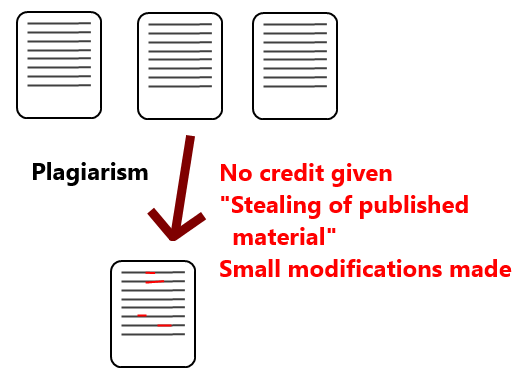
There has a bit of an uproar in a section of the Atheist community over the plagiarism imbroglio involving CJ Werleman. Mr. Werleman is a writer whose pieces have shown up on AlterNet and Raw Story, among other outlets (though AlterNet has taken down his articles and issued an apology for publishing his work). His style can be best described a polemical and combative, and thus has made his share of enemies. When he started making accusations about Sam Harris and the “New Atheists”, though, he really stirred up a hornet’s nest. The point of contention seems to be Werleman’s contention that Harris and his ilk are guilty of bigotry and Islamophobia (a term which I detest) because they cite the real harm done in the name of the religion of Islam. In turn Harris and Company have accused Werleman and his backers of being politically correct and unwilling to look beyond their liberal righteous anger to see the true harm that people do in the name of Islam. Incidentally, Islam is not a race, it’s a religion, a fact that Werleman can’t seem to wrap his head around when accusing others of being racist when it comes to Islam.

In the midst of all this hullabaloo came Godless Spellchecker’s blog post accusing Werleman of being a plagiarist, and citing many examples to support his contention. This post was done in consultation with Peter Boghossian, a prominent and respected name in Atheist circles, so this was not some hack job. The evidence was there, and Werleman was for all intents and purposes busted. He later issued a sorry-not sorry type of apology (which has disappeared but is summarized on Godless Spellchecker’s blog post), and then later another apology which while more extensive still reeked of insincerity. Then came news that he was possibly using another Twitter account another a different guise to promote his “official” Twitter account, and to basically represent a fawning supporter of his position. Curioser and curiouser.

Needless to say, Werleman’s reputation is now in tatters. Plagiarism is a serious offense in the journalism world, and whether it was intentional or no, it displays laziness and sloppy writing by forgetting to cite your sources. Of course, his snarky apology didn’t help, and his feeble attempt at a tu quoque defense by accusing Sam Harris of plagiarism as well made it even worse. Of course, he has his defenders, and undoubtedly he will still publish writings that some people will read, but he will probably never reach the same level of credibility as he has previously enjoyed.

This is truly a shame, because whatever you may think of Mr. Werleman and his views, he did offer up some good points in refutation of arguments put forth by Harris and others, and, as JT Eberhard points out in his blog:

I think the atheist movement is better for having a multitude of positions, so long as those positions are fairly debated with the intent of figuring out what is true, not with just trashing people who hold different opinions.  Over the past few years we have gotten less adept at this, but holding to that principle is why I’m so sad to see CJ doing this to himself.  I know a lot of Harris supporters are happy about this, but even though I mostly agree with Sam I’m not happy. I want my opponents to be people of integrity. Even if we disagree on some points, we’re still ultimately allies on atheism. That’s enough for me to want them to be good people.

Mr. Q on his Quaranify Me vlog says something similar (Shameless plug: I just became a patron of the Quranify Me podcast. If you want to as well go to his Patreon page. It’s a great show!)

If there is not open and honest debate on issues surrounding Atheism, even if we may disagree on these ideas, then our ability to defend ourselves from other positions will atrophy, and this will benefit no one, and will certainly open us to attack from real adversaries, such as right-wing religious nutjobs. And I, for one, do not want to see that happen.

Williamson County, TN, School Board Trying to Sneak Prayer Into Meetings

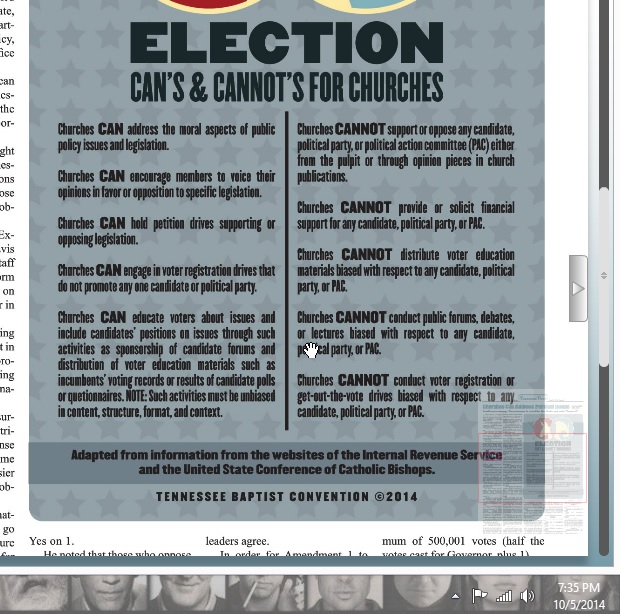
About a week ago I came across an article stating that the Williamson County school board right here in Middle Tennessee was considering instituting a Christian prayer at the beginning of each meeting. For those not familiar with Tennessee geography, Williamson County is one of the counties adjacent to Metropolitan Nashville – Davidson County, aka Music City. Naturally, they are many commuters to Nashville who live in Williamson County, and I happen to be one of them. You can therefore imagine my anger when I heard about this clear Constitutional violation. And why, you may ask, am I so certain of this violation? Because soon after this article appeared, the Tennessee chapter of the ACLU issued a statement which says, in part:

The U.S. Court of Appeals for the Sixth Circuit has declared that prayers at school board meetings are unconstitutional.  In Coles ex rel. Coles v. Cleveland Bd. Of Educ., the Court held that the “the practice of opening each school board meeting with a prayer has the primary effect of endorsing religion.”

That’s pretty clear language, no? Even the school board attorney acknowledges it’s illegality:

Citing a ruling by the U.S. Court of Appeals for the Sixth Circuit, board attorney Bill Squires said praying at school board meetings has been ruled unconstitutional, though praying before public meetings such as at city council meetings remains legal.

Of course, this doesn’t stop certain board members from still wanting to institute the prayer, regardless of whatever legal costs might be incurred, you know, because Jesus:

Board member Candace Emerson maintains prayer ought to be part of the meetings because of its value.

“A prayer has saved my life more than once,” Emerson said. “I’m just telling you, there’s an incredible power, especially when it’s collective. I know I would not be sitting in this chair today — on two occasions recently.”

Because prayer has been proven to save people lives, says no study ever.

Thankfully, the Superintendent of the school system seems to recognize the idiocy of challenging a court ruling, and what costs would be involved:

WCS Superintendent Mike Looney challenged board members to think about the cost of the fight.

“Are you willing to stand up on a matter of principle and spend hundreds of thousands of dollars in attorneys’ fees to make a point based on your personal belief that may or may not align with those of other people in the community?” Looney said.

So at least there are some sane people at the Williamson County school board.

Naturally, as a newly minted member of the FFRF, I went to their page for reporting potential violations and made a request for them to send a letter gently reminding the board of their obligations under the law. I haven’t heard anything back, possibly because the board hasn’t actually tried to institute the prayer (yet), but I did come across the previously mentioned ACLU statement. Hopefully the school board will rethink its position and drop the whole issue. The next meeting is on October 16th, so I guess we shall soon find out. But if for some odd reason they decide to be ignoramuses and actually try to make this invocation to their Skydaddy a reality, there shall be a protest, and I shall be a part of it.

The Fear of Islamophobia, and the Stifling of Debate

I recently saw an interview on CNN with Reza Aslan, the Islamic scholar and author, whose most recent work is “Zealot”, which is basically a biography of Jesus (who I don’t think even existed, but that’s another story). He was brought on to comment on the recent comments made by Bill Maher on his end-of-show monologue in the most recent episode of “Real Time with Bill Maher” (You can see both the relevant clip and interview with Aslan here). Mr. Aslan than proceeds to call Maher’s comments “facile”, and goes on to say that we shouldn’t paint all Muslims with a broad stroke; that only a small percentage are extremists, and also calls critics of Islam “bigots”.

Of course, it goes without saying that the vast majority of Muslims are peace-loving moderates who abhor the sort of acts of barbarity done in the name of their religion. The same is true for any religion, be it Islam, Christianity, Judaism, Buddhism, etc. Most humans hate just want to live out their lives in relative obscurity, regardless of religion (or lack thereof).

Let me say also that while I love watching Maher and often agree and even find humorous most of what he says, he can often generalize and generally be an arrogant prick.

But that doesn’t mean that he’s necessarily wrong. And this where I have issue with Mr. Aslan. Or, more specifically, some comments he made regarding female genital mutilation and the treatment of women in general in most Muslim countries.

He states:

I mean, the argument about the female genital mutilation being an Islamic problem is a perfect example of that. It’s not an Islamic problem. It’s an African problem.

further:

It’s a Central African problem. Eritrea has almost 90 percent female genital mutilation. It’s a Christian country. Ethiopia has 75 percent female genital mutilation. It’s a Christian country. Nowhere else in the Muslim, Muslim-majority states is female genital mutilation an issue.

While those statistics are correct for Eritrea and Ethiopia, he fails to mention that of  the top 10 countries on the UNICEF list for FGM, nine of them are majority Muslim countries. And to say nowhere else but Central Africa is it a problem, is just patently false: Number four on that list is Egypt, which is Northern Africa.

He also says we should not judge Saudi Arabia and Iran, which everyone would agree were extremist in their interpretation of Islam, to what he considers more moderate countries such as Indonesia and Turkey, and this is true: every nation is responsible for its own actions. Saudi Arabia and Iran, however, use Islam to justify their oppressive laws, with punishments including stoning and beheading, as well the chronic oppression of women. These laws exist in other Muslim nations as well, not just the two “extremist” states.

As not only an atheist, but also an anti-theist, I believe that religion is one of the most destructive forces in history. Islam is not the only religion guilty of horrible crimes, certainly: Christianity has a hold on the far-right in the U.S., who want to establish it as a the State religion, and it’s also used to justify bombing abortion clinics and murdering doctors who perform those abortions. But to pretend Islam is not at least partly responsible for the actions of these Muslim extremists is ignoring the facts, and calling anyone who presumes to question the role of Islam as a motivation for these actions “bigots” only serves to stifle debate, and this is an issue that very much needs to be discussed.